tabliczka znamionowa poliweglanowa

Nameplates

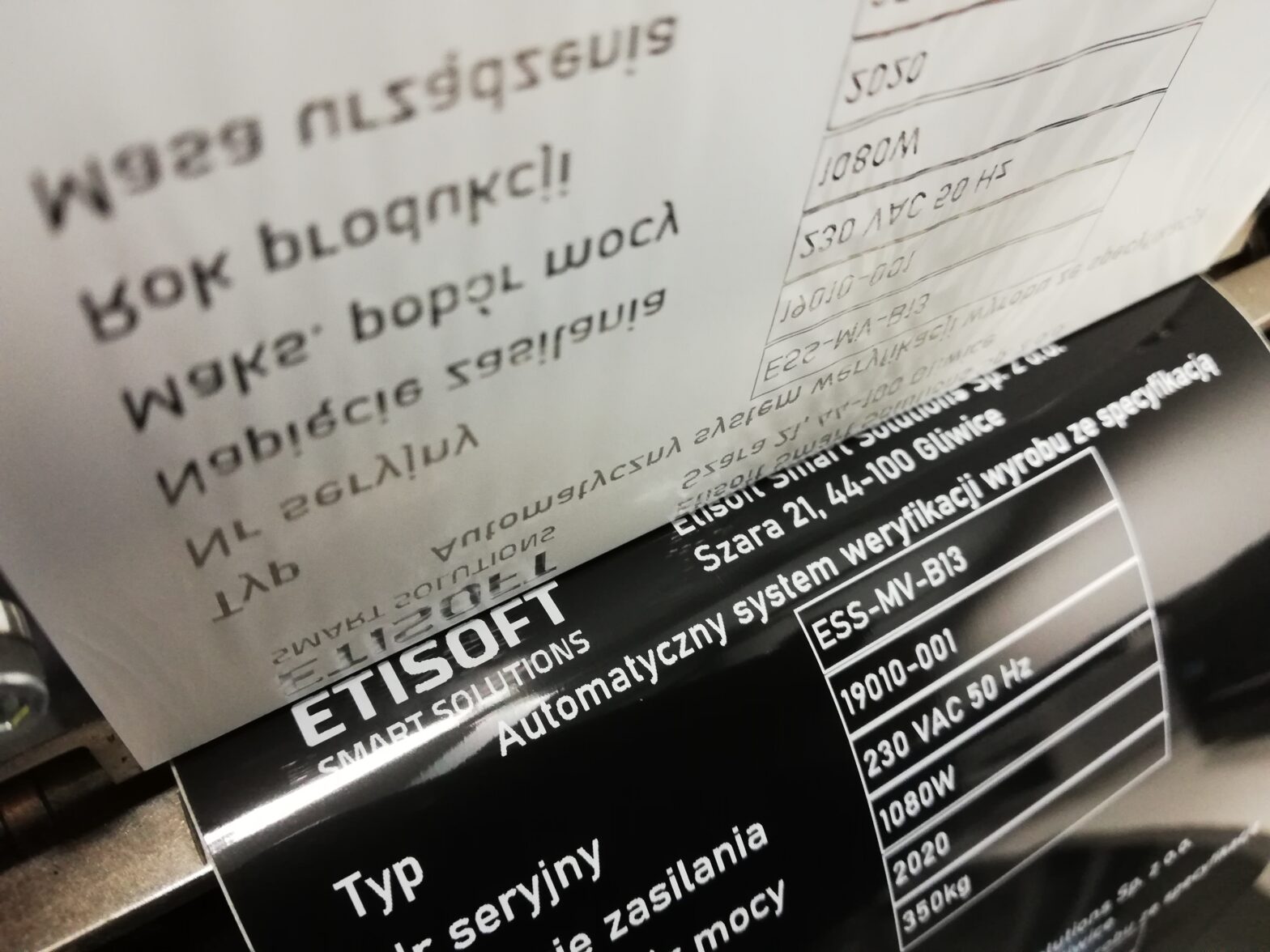
Rating plate – the materials which it is made of and its content are specified by the EU machine and electric directives and harmonised standards concerning groups of devices. It contains basic data and information which characterise the device and its manufacturer. Regardless of the type of material it is made of and how it is mounted, it is required that the plate remains readable throughout the whole period of usage of the device. A rating plate in the form of a printed self-adhesive foil label is successfully used on devices in many industries. The most convenient, fastest and most popular method of printing a foil rating plate is thermal transfer technology.

  • labels are resistant to the changes of temperature, humidity and detergents for many years
  • durable adhesive that matches the material the device is made of
  • abrasion-resistant imprint
  • the solution is compliant with the industry standards

Application

branża-agdbranża-automotivebranża-constructionsbranża-electronics
Inquiry

Nameplates for electronic devices

The nameplate of your computer, monitor or TV contains the most important information, such as the model of the device and the ratings. The nameplate of a TV or monitor must be durable and the print must be legible for many years. Nameplates made of self-adhesive labels are characterized by a very strong adhesive, which is intended for gluing to construction sites made of plastic.

Vehicle hook nameplate

The vehicle hook nameplate is most often placed next to the socket for the electrical harness. It contains all the necessary information needed to register a towbar, including the approval number, the permissible weight of the towed trailer, the maximum towing capacity of the towbar, the maximum static vertical pressure on the towbar and the manufacturer’s details. Such a plate must be resistant to extremely difficult road conditions, such as: precipitation, slush, road salt, temperature changes, UV radiation, as well as cleaning agents during pressure washing. For this type of application, specialized self-adhesive labels have been selected that meet the above conditions. The used very strong adhesive gives great adhesion to metal elements, guaranteeing that the nameplate will not fall off. The durable, abrasion-resistant print ensures that the nameplate data is legible even after many years.

Nameplates of household appliances

The nameplates for stoves, ovens and hobs are of the same type for both gas, electric and induction hob models. They contain basic information such as: device name, manufacturer details, serial number, year of manufacture and rated parameters: rated voltage, heating element voltage, gas type and consumption, heat load and safety certificates. Nameplates are made of self-adhesive labels with increased resistance to high temperatures, moisture, cleaning agents and abrasion. Nameplates for refrigerators and freezers are most often affixed inside to the side wall to make it easier for the user to read the information when needed. That is why the plates are made of special labels that are resistant to low temperatures, moisture, disinfectants, ensuring the durability of the label throughout the life cycle of the refrigerator, refrigerator-freezer.

Nameplates of Automotive components

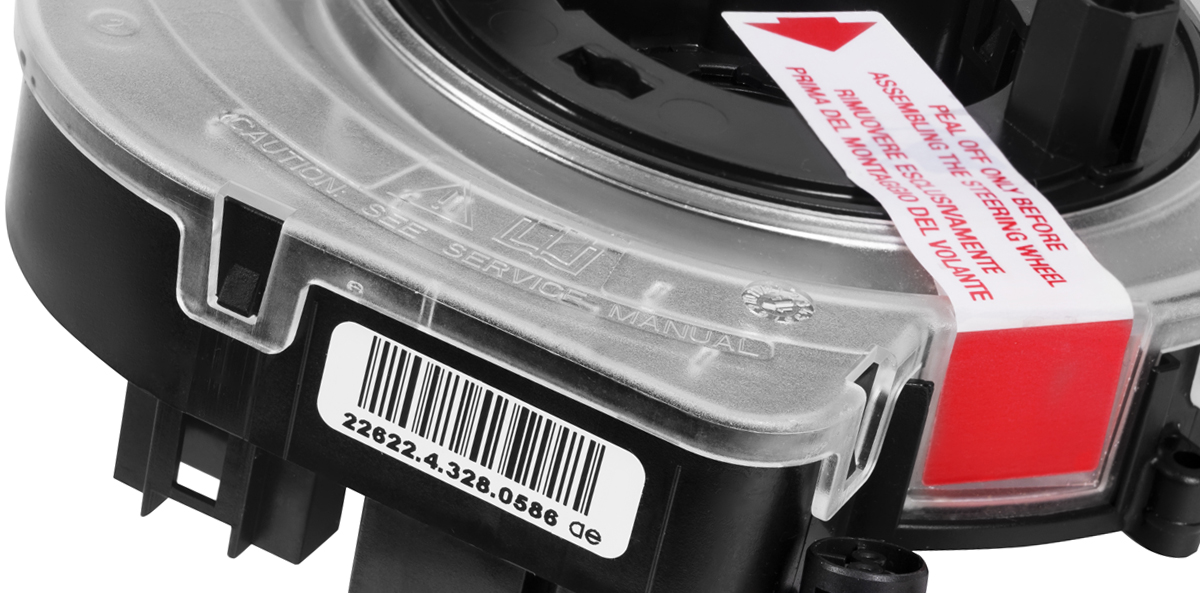
The nameplate of electronic equipment used in the automotive industry must be unique, durable, and the print must be legible for many years. For this type of application, specialized labels with a strong adhesive have been selected, which are resistant to harsh conditions and meet the high standards of the Automotive industry. Sometimes the nameplate, in addition to the most important data such as the name of the manufacturer, component, series number, contains information warning about the danger and is printed on a yellow field.

Nameplates

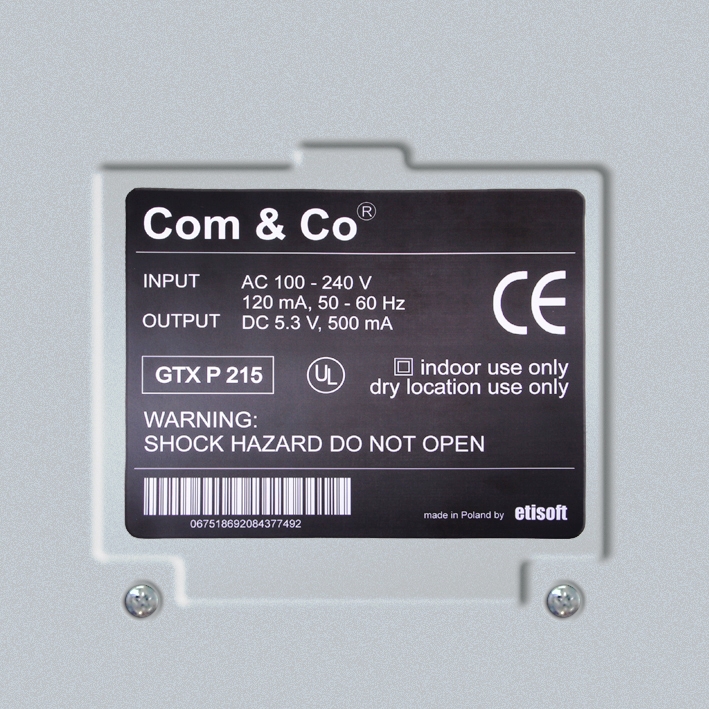
Self-adhesive nameplates provide durable marking for a device that must remain legible throughout its entire lifespan. They contain the device name, manufacturer details, year of manufacture, serial number, and rated parameters such as rated power, power supply type, weight, or load capacity. Etisoft, a label manufacturer for over thirty years, produces them as foil labels printed via thermal transfer using resin ribbon – unlike traditional plates, eliminating the need to drill holes in the housing.

Data and parameters

Parameter Value
Form Self-adhesive foil label; unlike traditionally manufactured plates, it requires no additional hole drilling
Material Durable polyester foil or polycarbonate; polycarbonate labels offer the highest resistance and durability
Printing Technology Thermal transfer printing, resin thermal transfer ribbon
Nameplate Colors White, silver, black, yellow/gold
Thermal Transfer Ribbon for Black Nameplates White resin thermal transfer ribbon: PANTONE RESIN CR WHITE (flat-head printheads), PANTONE RESIN ED WHITE (near-edge printheads)
Thermal Transfer Ribbon for White and Silver Nameplates Black resin thermal transfer ribbon: DIAMOND RESIN SP (temperature resistance up to 300 °C, UL/CSA certified), (near-edge and flat-head printheads)
Resin Print Resistance Mechanical abrasion, scratches, chemicals, oils, greases, solvents, alcohols, moisture, UV radiation
Adhesive Selected based on surface type—customized for metal surfaces or plastic housings
Quality Systems ISO 9001:2015, ISO 14001:2015, IATF 16949:2016
Industries Nameplates for electrical and electronic equipment, consumer electronics / home appliances, automotive, machinery, vehicles, and power tools

How a nameplate is selected

When selecting the foil and adhesive for a nameplate, the following factors are considered:

  • Substrate type – The device housing where the nameplate will be applied. The adhesive is matched to the specific material – glass, metal, metal alloy, painted surface, low- or high-surface-energy plastic – to form a strong chemical or mechanical bond.
  • Surface – Depending on whether the surface is smooth, uneven, or curved, either a rigid or a flexible, surface-conforming foil is selected.
  • Operating conditions – Operating temperature, outdoor environment, humidity, detergents, oils, greases, and UV radiation dictate the choice of foil and print type.
  • Plate format – The size of the nameplate may be specified in technical documentation. Typically, label dimensions are tailored individually to balance legibility and aesthetics.
  • Target market – For the US and Canadian markets, UL certification is required for labels and nameplates.

Certifications and testing

UL certification is required in the US and Canadian markets for labels and nameplates. Etisoft was the first company in Poland to implement the PGAA (Authorized Label Suppliers) program under UL and is an authorized supplier of UL-certified labels. As part of UL certification, self-adhesive labels undergo testing for adhesion to selected surfaces, temperature resistance, chemical resistance, mechanical durability, and resistance to UV and humidity.

Regardless of whether a client requires UL certification, material samples intended for nameplates are tested in Etisoft’s laboratory. Key evaluation criteria for nameplates include print durability, environmental resistance, and chemical resistance.

Etisoft Sp. z o.o. manufactures self-adhesive nameplates in accordance with implemented quality systems:

  • ISO 9001:2015 – Quality Management System (valid until April 4, 2027)
  • ISO 14001:2015 – Environmental Management System (valid until April 4, 2027)
  • IATF 16949:2016 – Quality Management System for the Automotive Industry (valid until August 21, 2028)

Costs and pricing

Foil type, adhesive, and printing methods are selected based on the specific device and operating conditions. Pricing also considers the nameplate dimensions and order volume.

Custom nameplates from ETISOFT

Custom nameplates for equipment are manufactured at ETISOFT with maximum precision. The label material is color-matched to the device housing, and the adhesive is chosen based on the surface material (plastic, metal, painted surface). Samples undergo laboratory testing to verify adhesion, chemical resistance, flammability, and accelerated aging performance. This guarantees that the nameplate will remain legible even after years of intensive use. Device nameplates are produced at ETISOFT according to ISO 9001, ISO 14001, and IATF 16949 quality standards.

Key advantages of custom nameplates from ETISOFT include:

  • Aesthetic finish – Graphically designed in accordance with client specifications
  • High environmental resistance – Proof against temperature fluctuations, moisture, and UV radiation
  • Durable adhesive – Tailored to the specific substrate material
  • Abrasion and chemical resistance – Resistant to friction and aggressive detergents
  • Industry compliance – Meets relevant regulatory standards

We invite you to explore our full range of nameplate solutions. We are happy to answer your questions and assist in specifying the ideal nameplate for your equipment. ETISOFT is a nameplate manufacturer dedicated to precision, top quality, and long-term durability.

Contact our specialist


FAQ – Frequently Asked Questions


What does a nameplate contain?

Every device must carry a nameplate in compliance with standards; this applies to machinery, vehicles, home appliances, and tools. For machinery, required data is defined by Directive 2006/42/EC of the European Parliament and of the Council of 17 May 2006 on machinery. The manufacturer must affix to the machine, in a visible, legible, and indelible manner: the business name and full address of the manufacturer, designation of the machinery, CE marking, designation of series or type, serial number (if any), and year of construction.

A rating label typically includes:

  • Device name
  • Manufacturer name
  • Serial number and year of manufacture
  • Connection details and power rating class
  • Core rated parameters
  • Safety marks/certifications and other relevant details

What changes with machinery regulation (EU) 2023/1230 from January 20, 2027?

Machinery Directive 2006/42/EC will be replaced by Regulation (EU) 2023/1230, applicable from January 20, 2027. From this date, the old directive ceases to apply, and machines placed on the EU market must meet the requirements of the new regulation. For manufacturers, this necessitates reviewing nameplate content prior to this date – making it an ideal time to plan design updates with your label supplier.

How does a rating label differ from an engraved plate?

A rating label is a durable self-adhesive label made of resilient foil printed via thermal transfer. Compared to traditional engraved metal plates, it requires no hole drilling, and its color can be matched to the housing (white, silver, gray, or black). Durability is achieved through precise selection of material, adhesive, and ribbon rather than metal thickness.

What are the dimensions of self-adhesive nameplates?

There are no standardized dimensions for nameplates. Dimensions are specified by the device manufacturer to ensure all printed information is clearly legible for the user.

Is the nameplate UV resistant?

Yes. Prints made with resin thermal transfer ribbons are resistant to UV radiation, mechanical abrasion, scratches, chemicals, oils, greases, solvents, alcohols, and moisture.

Which nameplate is suitable for refrigerators and freezers?

Nameplates for refrigerators and freezers are typically applied inside on the side wall for easy reading. They are manufactured using specialized labels resistant to low temperatures, moisture, and disinfectants, ensuring durability throughout the appliance’s entire lifecycle.

How does a TV nameplate differ from an energy label?

These are two distinct markings on the same device. The nameplate identifies the equipment—model, rated parameters, and safety details—and remains permanently attached. The energy label for TVs and monitors displays energy efficiency class, power consumption, annual energy usage, screen diagonal, and power switch details. Energy labels are applied in retail stores to allow consumers to compare efficiency across models and use removable adhesive that leaves no residue upon removal. The EU introduced mandatory energy labeling for home appliances and consumer electronics in 1994.

What conditions must a towbar nameplate withstand?

A towbar rating plate is usually located next to the electrical socket and contains registration data: approval number, maximum allowable trailer mass, maximum towing capacity, maximum vertical load, and manufacturer data. Because it operates under severe road conditions – rain, slush, road salt, temperature fluctuations, UV exposure, and high-pressure washing – it utilizes specialized high-tack labels designed for metal surfaces.

Does Etisoft supply UL-certified nameplates?

Yes. Etisoft is an authorized supplier of UL-certified labels. It is listed in the UL database under numbers LP5414 (PGAA program) and MH61735 (material certification), holding material certifications PGJI2/8 for unprinted labels and PGDQ2/8 for printed labels. Self-adhesive UL-certified labels are used as components in the electrical, electronic, automotive, and appliance industries.

How long does it take to certify a new material under UL?

Adapting existing certified material to the UL database without additional testing takes about one month. Adapting material that requires new testing typically takes 2 to 3 months.

Learn more about this product:

Back to top