
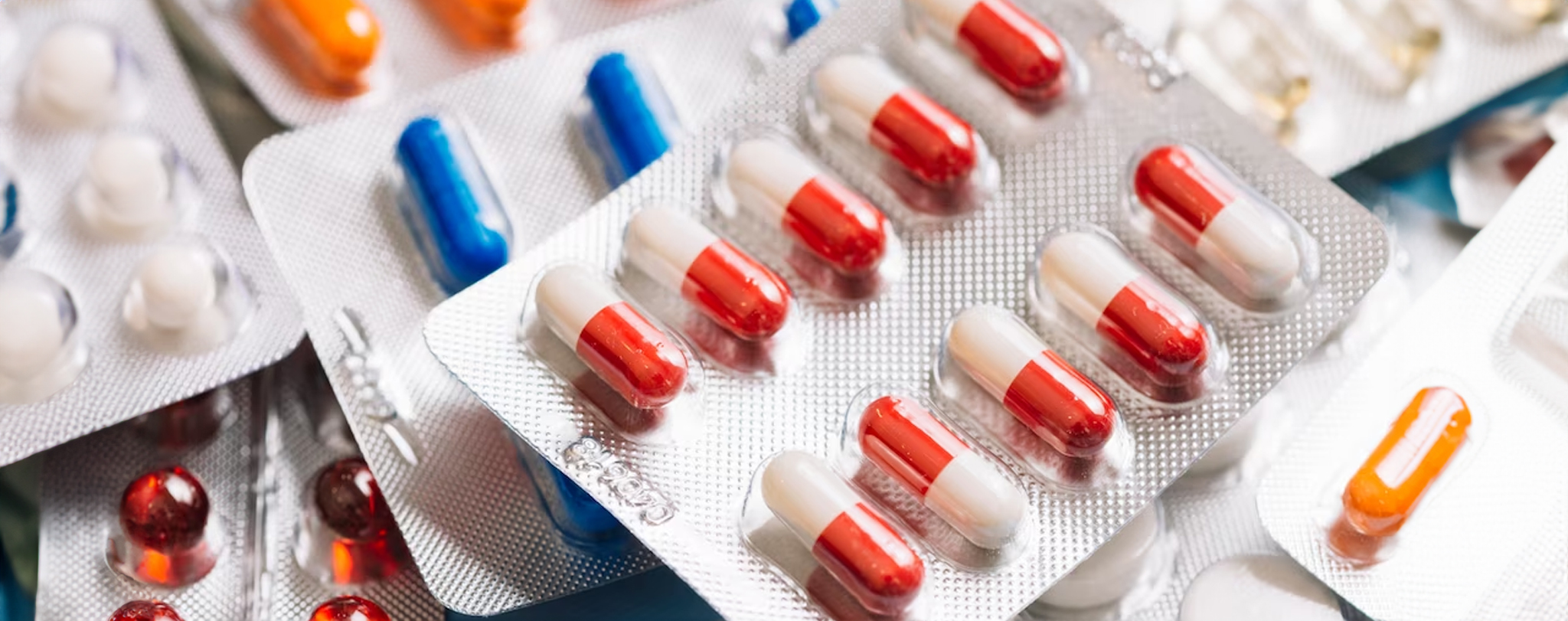


Pharmaceutical and laboratory labels ETISOFT
Pharmaceutical and laboratory labels are among the most demanding markings used in industry. They are responsible for product identification, patient safety, compliance with legal regulations and the smooth functioning of the entire supply chain. At Etisoft, we produce pharmaceutical labels intended for manufacturers of medicines, dietary supplements and medical devices, for diagnostic laboratories and for blood donation centres. Our solutions are created in accordance with the principles of Good Manufacturing Practice (GMP) and the individual requirements of customers operating in the pharmaceutical sector.
Types of pharmaceutical labels, their applications and quality requirements
The table below presents the types of pharmaceutical labels, their applications and quality requirements.
| Label type | Application | Key features | Requirements of the pharmaceutical industry | How we ensure quality |
| Pharmaceutical labels for medicines and supplements | Unit and bulk packaging of medicinal products | High legibility, durability of print, resistance to storage conditions | GMP compliance, legibility of information, product traceability | Design control, inspection during printing and re-inspection of finished labels |
| Serialisation labels | Products covered by the Falsified Medicines Directive | 2D Data Matrix codes, serial numbers, variable data | Protection against counterfeiting, ability to track the product throughout the supply chain | Verification of code correctness, control of variable data and quality reporting |
| Security labels | Packaging of medicines and medical devices | Protection against unauthorised tampering, tamper-evident features | Product safety and consumer protection | Material control and functional testing of security features |
| Laboratory labels | Test tubes, Petri dishes, microscope slides | Resistance to moisture, abrasion and disinfectants | Reliable sample identification and durability of markings | Control of adhesion, code legibility and material resistance |
| Blood donation labels | Blood bags, plasma bags, test tubes | Durability of markings during storage and transport of biological material | Full traceability of biological material | Multi-stage quality control and conformity documentation |
| Cryogenic Cryo labels | Biobanks, research laboratories, diagnostic centres | Resistance to very low temperatures and liquid nitrogen | Retention of legibility and adhesion under extreme conditions | Material tests, quality control and confirmation of performance parameters |
Labels for the pharmaceutical industry
The pharmaceutical industry requires markings that remain fully legible throughout the entire life of the product. The label must contain information on composition, batch number, expiry date and the identification data required by national and European regulations. It has to fit a large amount of data onto a small packaging surface.
We produce self-adhesive labels for marking medicines, dietary supplements, biological preparations and medical devices. Depending on requirements, they may contain variable data, anti-counterfeiting security features, barcodes and 2D codes used in serialisation processes.
Legibility of medicine labels and labelling requirements
One of the most important requirements for pharmaceutical labels is the legibility of information. When designing the markings, we pay attention to an appropriate font size, the contrast between text and background and the correct reproduction of the smallest graphic elements. We use solutions that improve the accessibility of products for visually impaired people. In many cases, pharmaceutical packaging is equipped with Braille markings, which allow people with visual impairments to identify the product independently.
Safe raw materials and adhesives for pharmaceutical labels
The materials used to produce pharmaceutical labels must meet stringent safety requirements. At Etisoft we use certified materials with low-migration and non-migration adhesives that reduce the risk of chemical substances migrating into the packaging or the medicinal product. The raw materials used have documentation confirming compliance with the requirements of the pharmaceutical industry: ISEGA certificates and declarations of conformity relating to EMA and FDA requirements. As a result, medicine manufacturers can safely use our labels in validation and audit processes.
Serialisation and 2D codes as protection against counterfeiting
The implementation of the Falsified Medicines Directive has made pharmaceutical labels an important element of the systems that protect medicinal products against counterfeiting. Today, the use of 2D Data Matrix codes containing individual serial numbers assigned to each pack is the standard. Such a solution makes it possible to track the product at every stage of distribution, from the production line to the pharmacy. Serialisation increases patient safety, reduces the risk of counterfeits entering circulation and supports the traceability processes required by the modern pharmaceutical industry.
Labels for medical laboratories and blood donation
For many years we have been supplying specialised markings and labels for medical laboratories, diagnostic laboratories and blood donation stations. The labels we offer remain legible despite contact with moisture, disinfectants or low temperatures. We also produce labels for marking blood bags and biological materials that require full traceability throughout the entire period of storage and transport.
Specialised pharmaceutical labels resistant to sterilisation and low temperatures
Our offer includes specialised cryogenic Cryo labels intended for research laboratories, biobanks and medical facilities. Cryogenic laboratory labels are resistant to low temperatures and retain their properties when the labelled test tubes are stored in liquid nitrogen. We also produce labels resistant to sterilisation processes and the action of aggressive chemicals. Thanks to carefully selected materials and modern printing technologies, the markings remain legible in the most demanding operating conditions.
How is the quality control of pharmaceutical labels carried out?
In the pharmaceutical industry there is no room for chance. Every batch of labels produced undergoes multi-stage quality control. We use vision inspection and re-inspection systems that enable the automatic detection of printing errors, colour inconsistencies, incorrect barcodes or erroneous variable data. Every delivery is accompanied by quality reports and certificates confirming the product’s compliance with the customer’s specification. This approach makes it possible to meet the high requirements of pharmaceutical manufacturers and the standards applicable during quality audits.
FAQ – Pharmaceutical labels
What requirements must pharmaceutical labels meet?
Pharmaceutical labels should ensure the durability of the print, high legibility of information, the ability to identify the product, and compliance with GMP requirements and regulations concerning medicinal products.
What adhesives are used in pharmaceutical labels?
The most commonly used adhesives are low-migration or non-migration adhesives, which reduce the risk of chemical substances migrating into the product or packaging.
What are the benefits of medicine serialisation?
Serialisation makes it possible to assign an individual serial number to each pack, which allows the product to be tracked throughout the supply chain and effectively protects the market against counterfeits.
Can pharmaceutical labels be resistant to sterilisation?
Yes. The specialised materials used by Etisoft make it possible to maintain the durability of the markings during sterilisation processes and contact with aggressive chemicals.
What labels are used in medical laboratories?
The most commonly used labels are those for test tubes, diagnostic containers and biological materials, which must remain legible during the storage, transport and analysis of samples.
What are cryogenic Cryo labels?
These are labels intended for marking samples stored at very low temperatures, including in liquid nitrogen. They retain their adhesion and legibility even in extreme laboratory conditions.