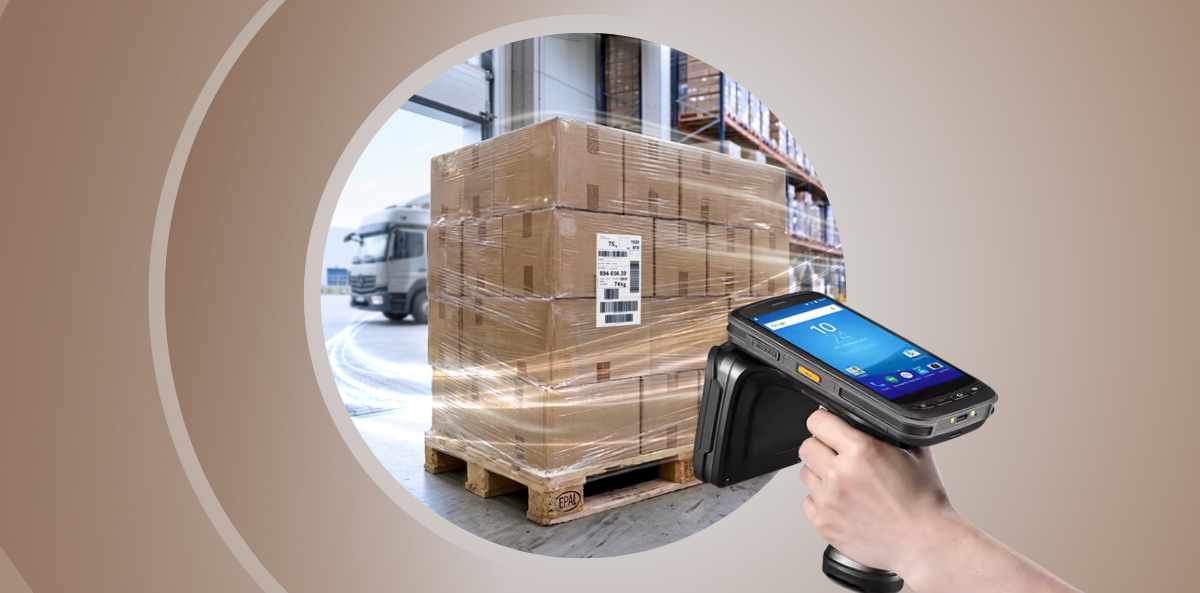
What are GS1-Compliant RFID logistics labels and how do they support logistics?
GS1 logistics labels are currently the most widely used solution in the transport and distribution of goods. Their main purpose is the clear identification of logistics units and linking them to specific products and manufacturers. Thanks to the global GS1 standard, which operates in more than 150 countries, businesses around the world can use a common, standardized data language, which significantly improves information exchange and cooperation. The basis of a logistics label is the GS1-128 or GS1 DataMatrix barcode, which enables automatic data capture. For a label to comply with the GS1 standard, it should contain key information such as:
- the SSCC number assigned to the logistics unit, and optionally additional information such as the GTIN identifying the product,
- the production date or expiry date,
- the batch or production series number, or the quantity of units contained in the package.
In this article, you will learn how GS1-compliant RFID logistics labels work, where they perform best, and why they are becoming an increasingly important part of modern logistics.
Table of Contents
What must a company do to label pallets with GS1 logistics labels?

For a company to label outbound pallets with GS1 logistics labels, it must join the GS1 system and obtain an identifying prefix for the entity (GCP – GS1 Company Prefix).
What are GS1-Compliant RFID logistics labels?
GS1 RFID logistics labels are a modern solution for labeling pallets and other logistics units. They provide a consistent, globally recognized way to identify goods throughout the supply chain.
A unique SSCC number plays a key role here, as it allows each pallet to be identified unambiguously. This makes it possible to track goods quickly and accurately — from the manufacturer’s warehouse, through transport, all the way to the final recipient. This solution eliminates the risk of errors and duplicated data in systems.
How does RFID speed up data capture in logistics?
The use of RFID technology enables automatic data capture without the need to scan each label individually. In practice, this means faster goods receiving and dispatch, more efficient stocktaking, and a significant reduction in errors and manual work.
GS1-compliant RFID logistics labels improve:
- cooperation between business partners,
- visibility of goods flow, and
- inventory management and delivery planning.
The result is lower operating costs, fewer complaints, and compliance with the requirements of major retail chains.
How does an RFID logistics label work?
An RFID logistics label is a self-adhesive label equipped with an RFID chip in which all data relating to the logistics unit is stored. The same information is also printed on the label in text form and encoded in barcodes. The most commonly used standard for RFID logistics labels is the GS1-compliant label, which may include the following numbers:
[SUPPORTING KEYWORD: RFID logistics labels]
- SSCC (logistics unit identification),
- GTIN (product identification),
- GLN (location identification).
What data can be read from an RFID logistics label?
The use of RFID chips in GS1 logistics labels allows multiple RFID labels to be read simultaneously without requiring direct visibility. In practice, this translates into a noticeable acceleration of warehouse operations, including dispatch, receiving, and stocktaking, while reducing the number of errors.
It is worth remembering that a properly working RFID label is not just about the carrier itself and the encoding method. It also depends — perhaps above all — on a properly selected RFID inlay, which allows the right amount of data to be stored and enables trouble-free reading in the customer’s environment.
How do RFID labels improve logistics and warehouse operations?
RFID logistics labels are used wherever a traditional GS1 label with a GS1-128 barcode is no longer efficient enough — especially in distribution and transshipment centers. RFID gate readers automatically read SSCC numbers from RFID logistics labels as a forklift passes through. This eliminates the need for the operator to stop and scan manually.
The same solution also works well in warehouses where pallets move through sorter systems and conveyor lines. Identification of logistics units takes place automatically. Stationary RFID readers placed along the line can read data from RFID tags reliably regardless of label orientation or, for example, when the label is covered with stretch film.
RFID labels, especially RFID logistics labels, significantly improve warehouse processes and real-time goods tracking. By using RFID gates in warehouses, it is possible to read multiple RFID labels quickly and simultaneously without scanning each one individually. This reduces errors and speeds up warehouse operations. They also improve supply chain visibility. They make it possible to track shipment location and status accurately, which leads to better inventory management and lower operating costs.
How can you generate GS1 and RFID logistics labels?
What is ETILABEL and what is it used for?

ETILABEL Integration is software used for designing and printing GS1-compliant logistics labels. ETILABEL supports barcodes, 2D codes, and also enables RFID tag encoding. The program holds an official GS1 compliance certificate, which ensures the correctness of the generated labels and the completeness of the data they contain.
With ETILABEL, you can easily generate:
- logistics labels using GS1-128 codes,
- as well as 2D GS1 DataMatrix and DataBar codes.
The Integration version enables integration with ERP systems and automatic data retrieval, for example shipment data, without the need for manual data entry.
How can you quickly prepare logistics labels for retail chains?
The ETILABEL Integration program includes ready-made pallet label templates for suppliers to retail chains such as:
- IKEA
- Auchan
- Biedronka
- Carrefour
- HEBE
- Intermarché
- LIDL
- Makro
- Netto
- Rossmann
Thanks to these ready-made templates, creating a logistics label with GTIN and SSCC numbers is fast and simple.

RFID Label Manufacturer
For more than 30 years, ETISOFT has specialized in the production of self-adhesive labels and modern RFID labels. The company manufactures labels tailored:
- to individual customer requirements,
- to business processes and specific industry needs, while maintaining the highest quality and compliance with global standards.
ETISOFT offers advanced Auto ID and RFID solutions supporting product identification and tracking in manufacturing plants, warehouses, and logistics. Thanks to its many years of experience and innovative approach, ETISOFT supplies:
- self-adhesive labels,
- RFID tags,
- and other consumables to 1,700 manufacturing plants worldwide.
ETISOFT works with large international companies, ensuring the highest quality and compliance with global standards. This cooperation is based on technological security and sufficient production capacity.
Looking for a proven solution for pallet labeling with GS1-compliant RFID logistics labels? We will advise, design, and implement a system tailored to your company’s needs.