RFID inventory system

The RFID inventory system is a solution designed for conducting physical stocktakes of fixed assets, goods, and documents tagged with RFID transponders. The system operates through the ETISOFT RFID App installed directly on the RFID handheld terminal. The entire process—from importing reference data, through scanning RFID tags, to generating summaries—takes place on a single device, which significantly lowers initial implementation costs. Compatible with ERP systems, this RFID inventory software allows for the import of reference stock levels and export of results via CSV files without interfering with parent systems. The RFID system for fixed asset, document, and inventory management significantly cuts down audit durations, directly translating to reduced auditing expenses and overtime costs. Automatic data capture from RFID tags ensures full record accuracy, eliminating manual entry errors. The RFID inventory software is widely applicable across enterprises, warehouses, offices, universities, healthcare facilities, and public administration institutions. Beyond inventory counting, the ETISOFT RFID App also enables reading and encoding RFID tags, as well as locating RFID-tagged items and documents.

  • Up to 90% reduction in inventory time
  • Reduced error rate – approximately 99% accuracy rate
  • Capability for more frequent inventory counts for improved asset control
  • Lower operational costs
  • Compatibility with accounting and ERP systems
  • Easy data import and export
  • RFID tag encoding functionality
  • Locating items and documents marked with RFID labels

Application

obszar-officeobszar-warehouseobszar-laboratory
Inquiry

How does the RFID inventory system works

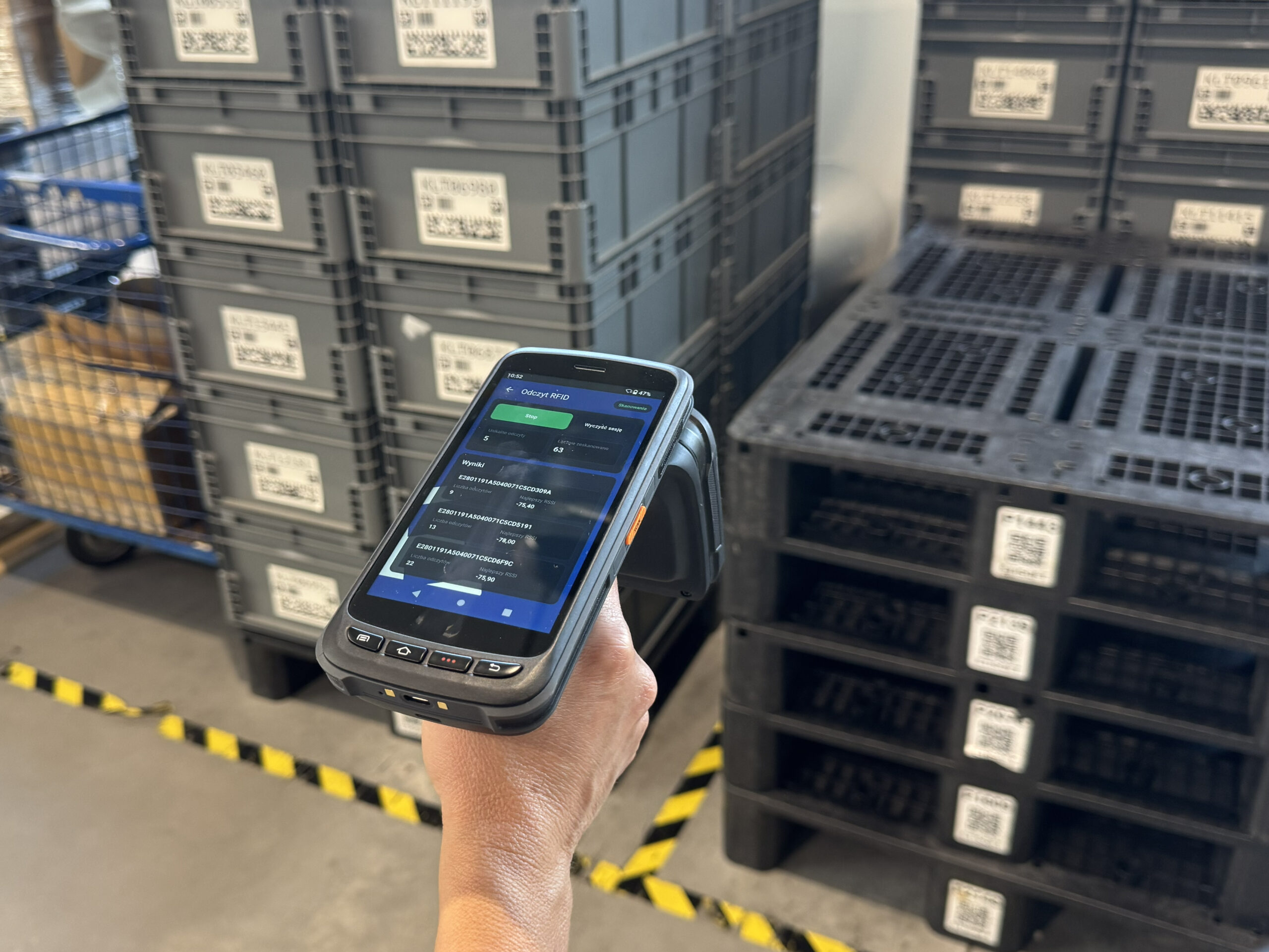
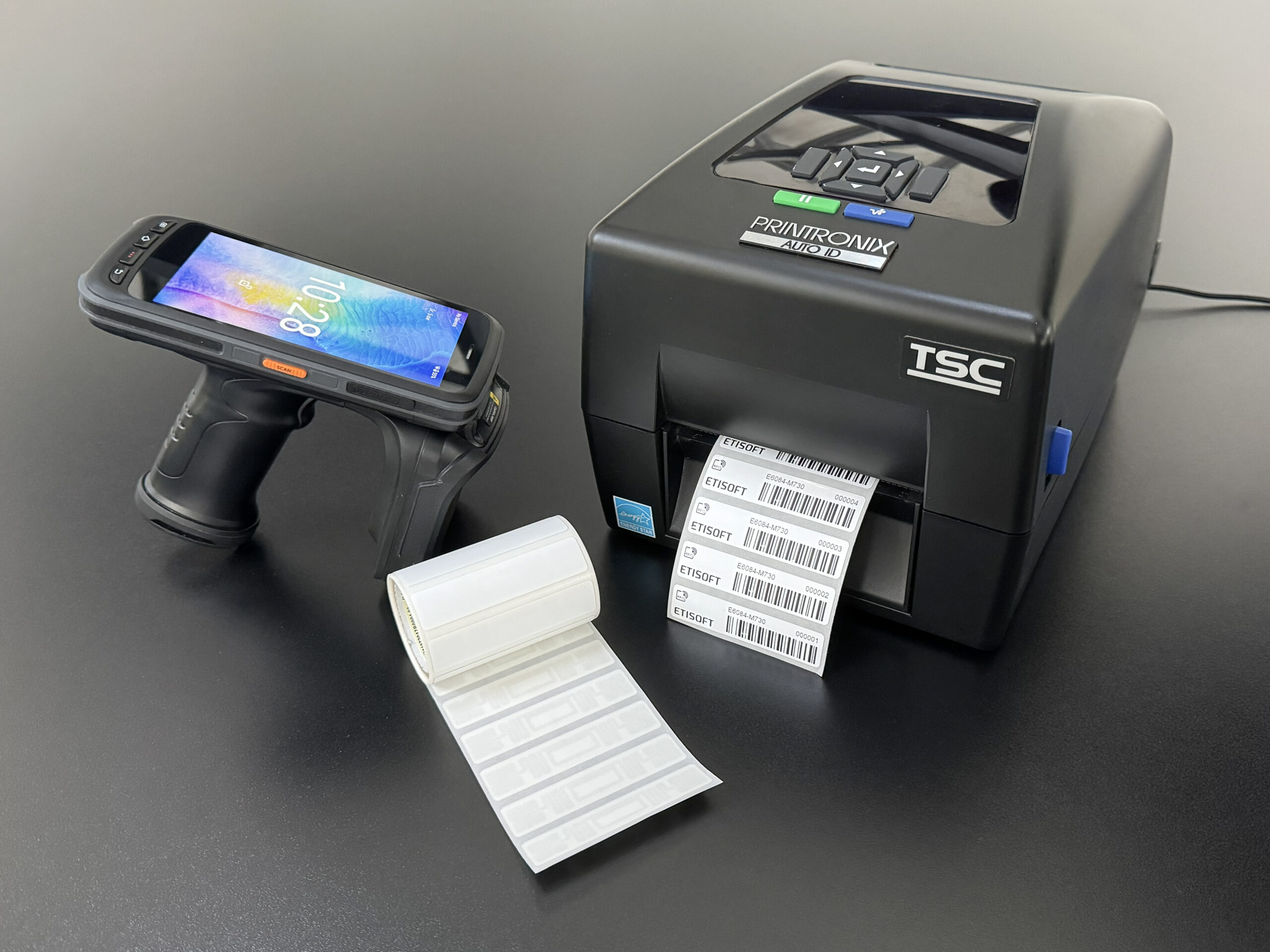
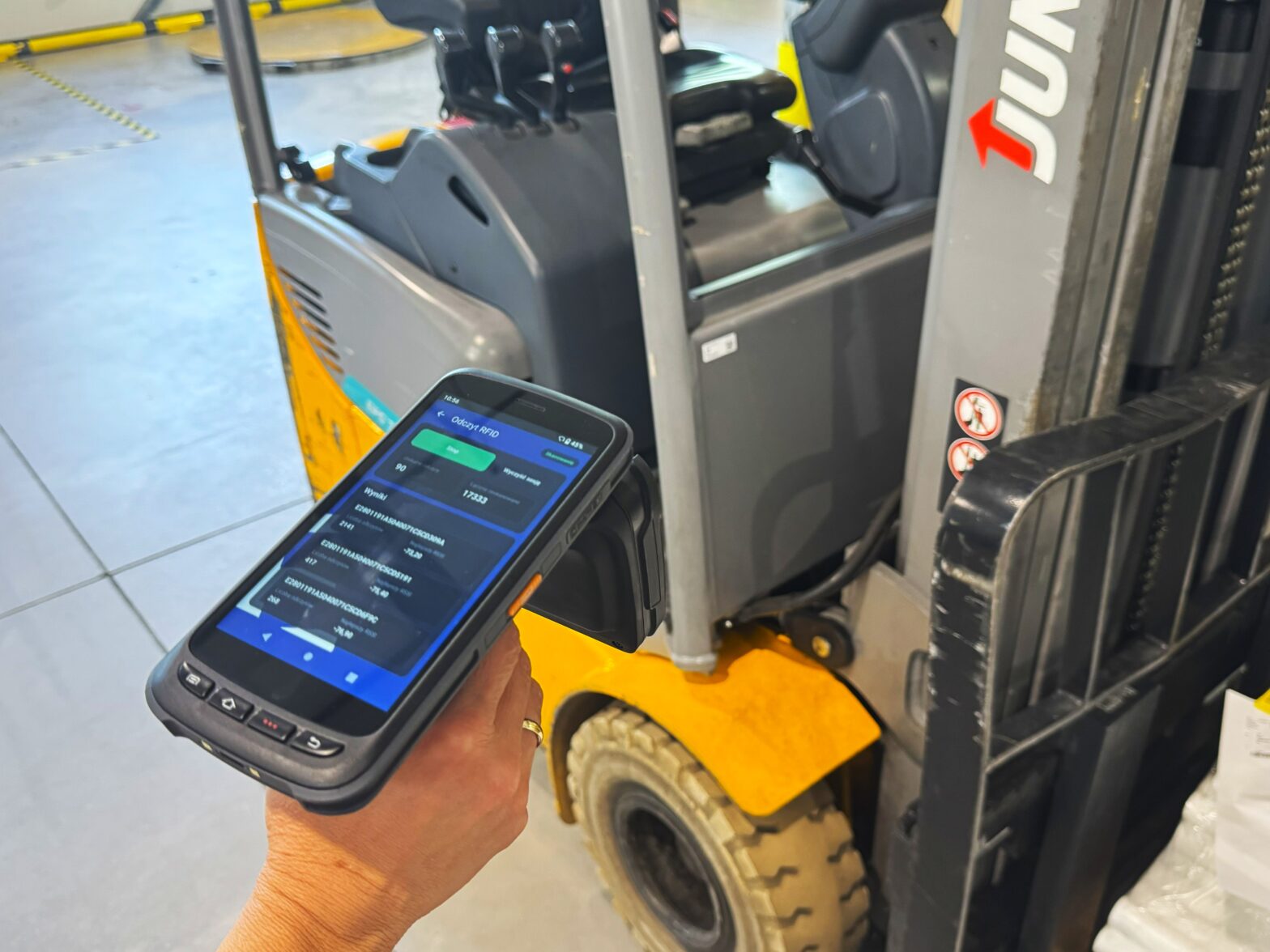
The RFID inventory system can be utilized across enterprises to perform physical stocktakes of fixed assets, finished products, warehouse inventory, documents, and production tools. All company assets subject to tracking—such as fixed assets, document files, production tools, and finished goods—must be tagged with RFID labels. These labels, containing unique reference numbers, are printed and encoded using an RFID printer. Having an in-house RFID printer allows for printing additional RFID labels at any time, not just during initial deployment. Inventory counts are carried out using an RFID mobile terminal equipped with the ETISOFT RFID App. The software enables importing reference asset data in CSV format into the terminal’s memory and creating an asset or document hierarchy structured by company departments. The inventory process involves the terminal scanning the data encoded in the RFID labels. Using radio waves, data from multiple RFID tags can be read simultaneously from a distance of several meters without the need to point directly at each individual label. Upon completion of the inventory process, the software compares the scanned results against the reference data, generating a list of missing and surplus items categorized by location or area. The application allows exporting the finalized inventory report to a CSV file for easy further analysis.

Conducting inventory counts using the RFID system reduces process duration from several days down to a few hours. This solution enables regular inventory audits, ensuring superior control over warehouse stock and corporate assets.

RFID inventory system components

  • RFID labels – All company assets, goods, documents, and production tools are tagged with RFID labels encoded with a unique reference number.
  • RFID label printer – RFID label printers allow for the on-demand printing and encoding of inventory labels at any time based on operational needs.
  • RFID mobile terminal – A handheld RFID reader used to capture data from RFID labels during inventory counts. The terminal can read data from multiple RFID tags simultaneously without requiring a direct line of sight or pointing at each individual label.
  • ETISOFT RFID App – Software installed directly on the mobile RFID terminal that enables users to build asset structures, conduct physical stocktakes, locate fixed assets, and encode RFID tags. The software provides seamless integration with databases, accounting systems, and ERP solutions.

Back to top