The 7 biggest problems in returnable transport item (RTI) management and how RFID solves them
We see seven problems most often in projects on returnable transport item (RTI) management. The first four are: no knowledge of RTI location, losses and missing RTIs, time-consuming stocktaking and too many RTIs in circulation. The other three are: difficult settlement with partners, no control of RTI condition and no data for business decisions. RFID technology reduces these problems. Each tagged RTI can be identified at each stage of its cycle, and the system records each event automatically. Did you know that in many companies, the costs of inefficient RTI management can reach several hundred thousand złoty per year? Read where these costs come from and how RFID helps to reduce them.
Table of Contents
What are returnable transport items (RTIs), and what can inefficient RTI management cost?

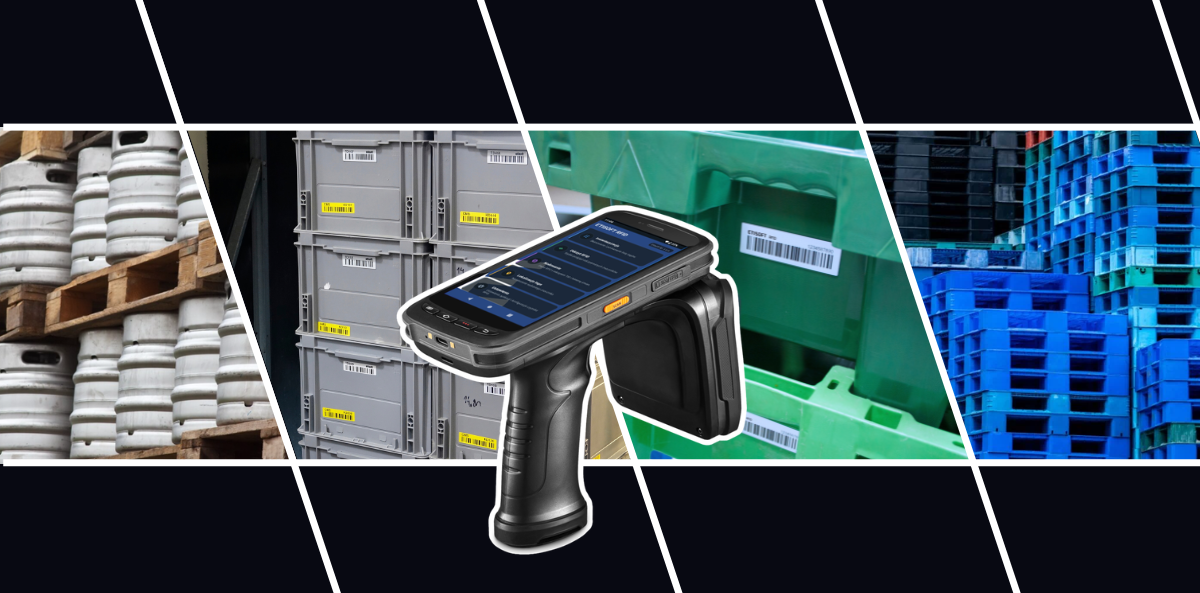
Returnable transport items (RTIs) are one of the most valuable assets in the supply chain, but also one of the most underestimated. KLT containers, pallets, mesh boxes, containers and special transport racks move every day between production, warehouses, logistics operators and customers.
The value of an RTI depends on its type. It can be from a dozen or so euros for a simple plastic container to several thousand euros for a dedicated transport rack. In manufacturing companies, an RTI fleet often has from several thousand to several tens of thousands of units. Thus, even a small level of losses, missing RTIs or inefficient use of assets can cause costs of hundreds of thousands of euro per year.
For this reason, RTI management is no longer only a logistics topic. More and more often, RTI management directly affects company profitability, production continuity and the quality of customer service.
Which questions about RTIs can many companies not answer?
We often meet companies that know how many RTIs they bought. But these companies cannot answer simple questions:
- how many RTIs are currently in circulation,
- where each asset is located,
- how many business partners keep RTIs,
- which RTIs are in active use,
- where the largest losses occur.
RFID technology answers these questions automatically. Each tagged RTI can be identified at dispatch, at receipt, in transport and during stocktaking, and the system records all events automatically.
Read how RFID solutions support RTI (Returnable Transport Items) management!
Below, we describe the seven problems that we see most often in RTI management projects, and how to remove them.
1. No knowledge of the current RTI location
A basic challenge is the lack of reliable information about the current status and location of RTIs. Assets move between production plants, warehouses, logistics operators and customers. The data in documents or IT systems does not always show the actual state of the process. As a result, the company formally owns a specific number of RTIs, but cannot clearly identify where they are in use.
Business consequences:
- lost RTIs,
- the need to buy additional RTIs,
- difficult planning and execution of operational processes,
- difficulty in assigning responsibility for assets.
Solution: RFID technology tracks the flow of RTIs automatically and identifies their location on an ongoing basis. The system can record each dispatch, receipt or movement automatically, without an operator.
2. High losses and missing RTIs
RTI losses are among the most common hidden costs in logistics. In most cases, the losses do not come from single events. They come from many small discrepancies that accumulate at the successive stages of material flow. The more complex the supply chain, the higher the risk of losing control over logistics assets.
A company with 50,000 containers with an average value of €20 per unit manages assets worth approximately €1 million. A loss of 10% of the RTIs means that the company must replace assets worth approximately €100,000. In practice, the actual cost can be much higher because of the operational consequences.
Business consequences:
- higher costs of replacing operational assets,
- higher safety stock levels,
- lower RTI availability for production,
- lower efficiency of RTI fleet utilisation.
Solution: automatic identification and monitoring of the RTI flow quickly show the places where most losses occur. The company can then take action to reduce the scale of the losses.
3. Time-consuming and inaccurate stocktaking
In many companies, RTI stocktaking still depends on manual counting or on scanning single barcodes. These methods are labour-intensive, expensive and prone to errors. As a result, discrepancies occur between the physical stock and the book stock, and these discrepancies reduce the quality of decisions.
Business consequences:
- high labour costs,
- limited data reliability,
- difficult audits and inspections,
- late identification of discrepancies.
Solution: RFID technology reads many RTIs at the same time, without scanning each carrier separately. This reduces stocktaking time from many hours to a few minutes. More importantly, it increases the frequency of inspections and the quality of the available data. As a result, the company can identify discrepancies faster and analyse the sources of losses more effectively.
4. Too many RTIs in circulation
Without full visibility of assets, many companies keep many more RTIs than their actual operational needs require. This approach is meant to protect the company against shortages. In practice, it ties up capital.
Business consequences:
- tied-up capital,
- higher costs of buying new RTIs,
- inefficient use of warehouse space,
- lower asset utilisation indicators.
Solution: optimisation starts with an analysis of the actual RTI rotation and RTI fleet utilisation. In many cases, only full visibility of the asset flow shows that some RTIs stay unused for a large part of the time.
5. Difficult settlement of assets between supply chain participants
When a company hands RTIs over to a customer, supplier or logistics operator, it often loses full control over the next steps of the process. This makes it difficult to identify who is responsible for the assets, and it makes settlement processes longer.
Business consequences:
- longer RTI return times,
- higher administrative costs,
- difficulty in enforcing responsibility,
- worse relationships between business partners.
Solution: the digital flow history of an RTI clearly shows the place of the last registration and who is responsible for the asset.
6. No control of the technical condition of RTIs
Many organisations treat RTIs only as logistics carriers. They rarely monitor the usage history, the number of rotation cycles, the frequency of use, the repair history or the inspection dates. However, for asset management, this information directly affects the maintenance costs of the RTI fleet.
Business consequences:
- higher operating costs,
- shorter asset service life,
- higher risk of product damage,
- loss of the ability to plan maintenance work.
Solution: individual identification of RTIs makes it possible to keep a usage history and to plan service work on the basis of actual data.
7. No data to support business decisions
One of the largest problems is not the lack of control over RTIs itself. It is the lack of data to evaluate the efficiency of the process. Without reliable information, a company cannot accurately identify the asset rotation level, the scale of losses or the actual utilisation of assets.
Business consequences:
- decisions based on estimates,
- limited optimisation possibilities,
- difficulty in calculating ROI,
- inefficient investment planning.
Solution: modern RFID systems supply detailed data on RTI utilisation, rotation, losses and on-time returns. With this data, the company can make decisions on the basis of actual operational indicators, not intuition.
How do the most mature companies manage RTIs?
The most mature organisations do not treat RTIs as a logistics cost. They treat RTIs as assets that help to create business value. These companies monitor not only stock levels, but also:
- rotation indicators,
- RTI fleet availability,
- asset utilisation level,
- the time that RTIs stay with business partners,
- maintenance and replacement costs of assets.
Access to this data supports better decisions on purchasing, on the optimisation of transport processes and on cooperation with logistics partners. RTI management then becomes part of the operational strategy.
Summary
The larger the scale of a company’s operations, the more important effective RTI management becomes. Lack of asset visibility, losses, expensive stocktaking and settlement problems can cause significant costs and make logistics processes more difficult.
RFID technology identifies and monitors RTIs automatically at each stage of their cycle. As a result, companies can reduce losses, use assets more efficiently and make decisions on the basis of actual data. RTI management then stops being only an operating cost and becomes an area that delivers measurable savings and a competitive advantage.
Do you want to check the potential of RFID in your organisation?
Do you manage RTIs and are you not sure where the largest losses occur or how many assets stay unused? Our experts help to analyse your current process. They identify the areas where RFID technology can increase RTI visibility, improve stocktaking and reduce operating costs.
Frequently asked questions about RTI management with RFID
Which RTIs can you tag with an RFID label?
RFID is used across the whole RTI fleet: in KLT containers, pallets, mesh boxes, containers and special transport racks. The label type is selected for the material and design of the RTI. You can find more about the selection of RFID labels for containers in the article How RFID solutions support RTI (Returnable Transport Items) management.
At which points of the cycle does the system record an RTI?
The system identifies a tagged RTI at dispatch, at receipt, in transport and during stocktaking. The system records each of these events automatically, without an operator.
Is it necessary to scan each RTI separately during RFID stocktaking?
No. An RFID reader reads many RTIs at the same time, so you do not need to scan each carrier separately, as with barcodes. Stocktaking that takes many hours manually takes a few minutes, and inspections can be more frequent.
How much can RTI losses cost?
With a fleet of 50,000 containers at an average value of PLN 80, the RTI assets are worth approximately PLN 4 million. A loss of 10% of the RTIs means that the company must replace assets for approximately PLN 400,000. The actual cost is often higher because of operational consequences, for example lower RTI availability for production.
How does RFID help to settle RTIs with customers and suppliers?
Each RTI has a digital flow history. This history shows the place of the last registration and who is responsible for the asset at a given time. As a result, it is easier to identify how long RTIs stay with business partners and to shorten their return time.
Can RFID be used to control the technical condition of RTIs?
Yes. Individual identification of each RTI makes it possible to keep a usage history. This history includes the number of rotation cycles, the frequency of use, repairs and inspection dates. On this basis, the company plans service work from actual data, not from estimates.
Which RTI fleet indicators should you monitor?
Companies most often monitor rotation indicators, RTI fleet availability, asset utilisation level, the time that RTIs stay with business partners, and maintenance and replacement costs. Data from the RFID system also makes it possible to calculate ROI and to check whether the fleet is larger than the actual needs.